1. Mud Pump Working Principle
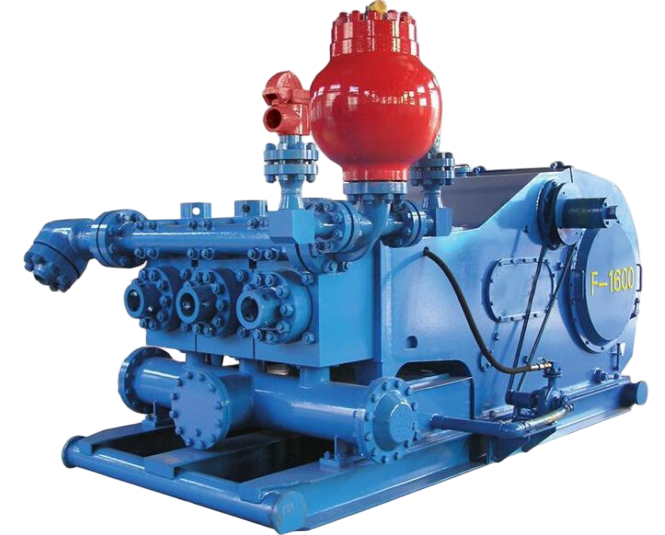
In the process of oil drilling, the mud pump plays a crucial role. It is not only a key piece of equipment for delivering mud or water into the borehole but also a core component of the drilling system. Through the mud pump, drilling fluid is injected downhole to work alongside the drill bit, enabling cooling of the drill bit, cleaning of the drilling tools, and bringing back waste materials such as cuttings. This series of operations not only ensures the smooth progress of drilling but also contributes to wellbore cleaning.
1.1 【Direct Circulation and Piston/Plunger Pumps】
Oil drilling typically employs a direct circulation method, wherein the mud pump delivers water, mud, or polymers to the bottom of the wellbore under specific pressure via the water hose, high-pressure hose, and the central bore of the drill string. Currently, piston pumps and plunger pumps are two common types of mud pumps used in the market.
A piston pump, also known as an electric reciprocating pump, operates based on the reciprocating motion of the piston, which causes periodic changes in the volume of the pump chamber, thereby enabling the suction and discharge of fluid. This type of pump consists of a pump cylinder, piston, inlet and outlet water valves, inlet and outlet pipes, connecting rods, and transmission devices. It is particularly suitable for high-pressure, low-flow rate drilling environments.
On the other hand, a plunger pump, as a key component of hydraulic systems, functions through the reciprocating motion of the plunger within the cylinder, altering the volume of the sealed working chamber to achieve the processes of oil suction and pressure delivery. This type of pump is more suitable for high-pressure, high-flow rate drilling conditions.
2. Common Faults of Mud Pumps and Their Repair Measures
2.1 【Coupling Clearance】
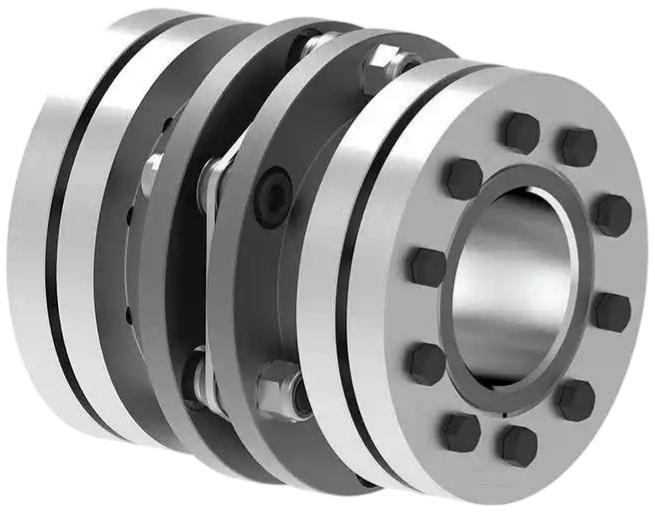
During the operation of a mud pump, the rotor may move toward the suction side due to wear of the balance disc, resulting in clearance in the coupling. To address this issue, it is necessary to promptly adjust the coupling clearance. It should be noted that, due to the effects of thermal expansion, the coupling clearance is generally adjusted to be 2-3 mm larger than the specified value.
2.2 【Balance Device Failure】
Wear of the balance disc and balance ring in the balance device may lead to uneven surfaces, thereby causing failure of the balance device. To address this issue, the grooves in the device must first be treated by welding and grinding the pump casing. Additionally, a piece of plastic with appropriate thickness and hardness should be inserted at the joint between the balance ring and the pump casing to compensate for surface irregularities. If the wear on the balance ring and balance disc is too severe, they must be replaced.
2.3 【Mechanical Seal Failure】
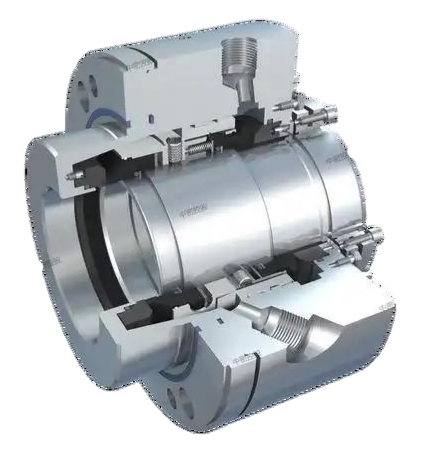
Improper sealing of the mechanical seal may result in mud leakage, which increases the axial movement of the pump rotor shaft and the interference fit between the auxiliary seal and the shaft. This could prevent the moving ring from sliding flexibly on the shaft or even cause it to fail to reset in time during pump reversal. Therefore, during the assembly of the mechanical seal, it is essential to ensure that the axial movement of the shaft does not exceed 0.1 mm, the interference fit between the auxiliary seal and the shaft is within the specified range, and the moving ring can move freely.
2.4 【Pump Shaft Failure】
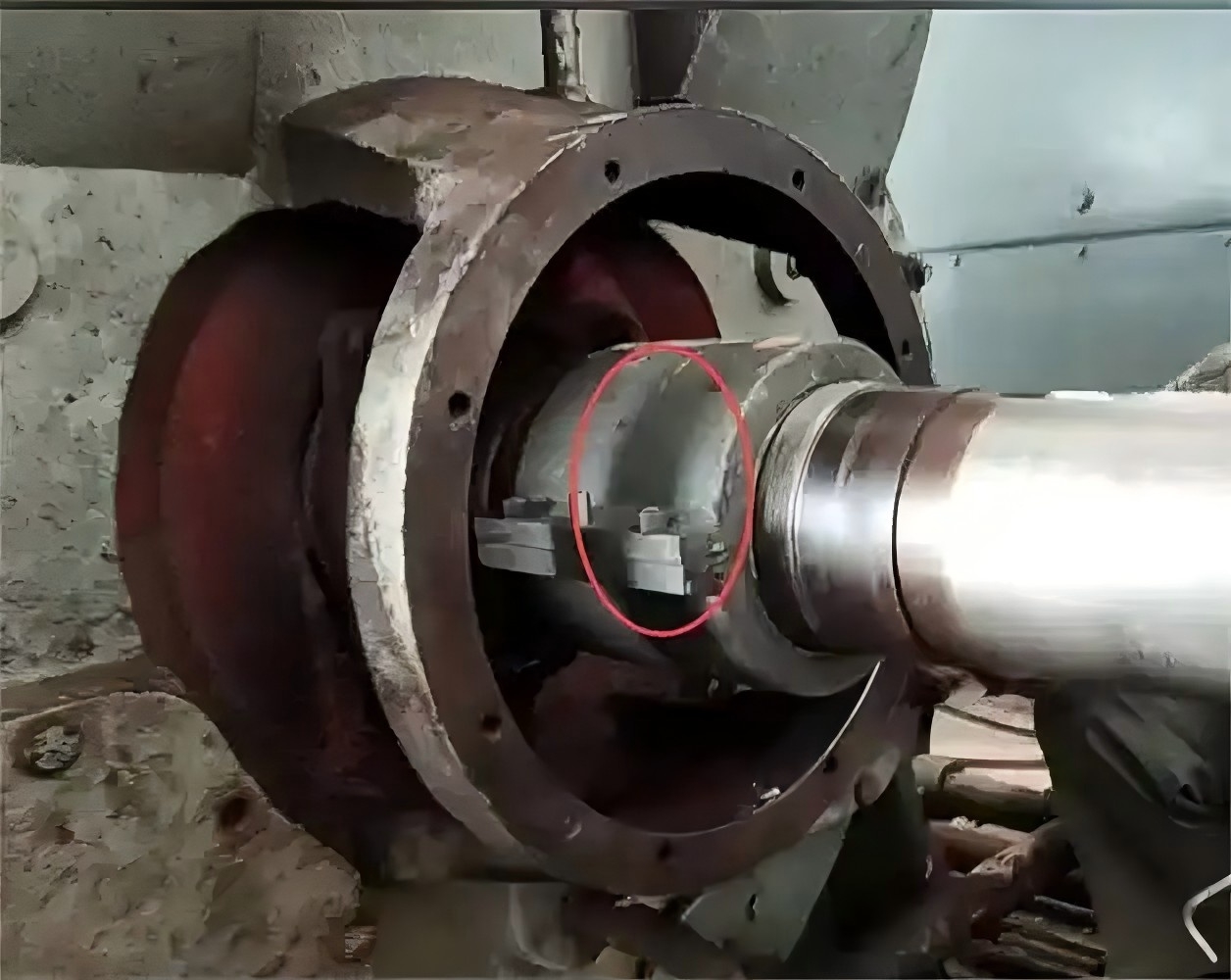
The pump shaft drives the sleeve to rotate during operation. If the pump shaft becomes bent or if there is misalignment between the bearing housing and the pump shaft, it may cause wear on components such as the pump casing, sleeve, and sealing ring. This can increase vibration levels in the pump body and amplify axial thrust, leading to friction between the balance disc and balance seat, which may ultimately result in equipment failure. For issues such as cracks, wear, and bending of the pump shaft, appropriate repair measures must be taken based on the severity of the damage. If the bending of the pump shaft exceeds 0.06 mm, it should be immediately corrected using a hydraulic press to prevent potential failures.
2.5 【Bearing Failure】
Bearing failures can be caused by various factors, including overheating leading to bearing burnout, substandard lubricant quality, insufficient oil volume, metal particles entering the bearing, angular misalignment between the pump shaft and the bearing, non-compliant bearing clearance or misalignment of the inner and outer rings, as well as excessive residual axial force. Targeted preventive and repair measures should be implemented to address these potential causes.
3. Key Points for Daily Maintenance of Mud Pumps
3.1 【Pre-Start Preparations】
To prevent vaporization during the operation of the mud pump, which could cause uneven heating and deformation of the pump body and rotor components, leading to equipment failure, it is necessary to warm up the pump before starting to ensure even heating of the pump body. Additionally, frequent pump switching should be avoided to ensure stable pump operation.
3.2 【Precautions During Operation】
During the operation of the mud pump, the transportation of balancing fluid is critical. To ensure the normal operation of the mud pump, close attention must be paid to the following points: First, prevent clogging of the balance pipe by promptly clearing any residual material inside to maintain its通畅. Second, a pressure gauge should be installed on the high-pressure side to monitor the pressure at the outlet of the balance pipe. Furthermore, attention should be paid to the temperature and vibration conditions when multiple multi-stage pumps are operating simultaneously to avoid pump wear.
3.3 【Handling During Shutdown】
When the mud pump is idle for an extended period, the pump shaft is prone to bending due to the weight of the gears. Therefore, the pump shaft should be rotated regularly to prevent it from being bent. At the same time, ensure that the outlet valve is tightly closed to prevent the backflow of internal medium from the pipeline into the pump, which could cause uneven heating or clogging.
3.4 【Requirements for Disassembly and Maintenance】
During the disassembly and maintenance of the mud pump, personnel must be familiar with the structure, components, disassembly sequence, and methods of the mud pump, and have the necessary tools ready. Dirty or worn parts should be cleaned and repaired promptly to ensure normal operation. Regular inspection and maintenance of the mud pump are also essential, and severely worn components should be replaced in a timely manner to ensure the integrity and efficiency of the mud pump.
04. Conclusion
In summary, the mud pump plays a pivotal role in the field of oil drilling. As the core component of the mud circulation system, it ensures the smooth progress of drilling operations. To fully leverage the efficiency of the mud pump and ensure its long-term durability, it is essential to have a deep understanding of its working mechanism and strictly implement daily maintenance measures. This approach not only extends the service life of the mud pump but also enhances the economic benefits for the enterprise.









 WhatsApp
 E-mail